BRENT FUNDING PARTNERS
Your partner for alternative funding solutions.

The Strategic Capital Report | Revenue Based Financing
What is Revenue-Based Financing? Strategic Fit: When Revenue is the Primary Asset. Analyzing the "Total Cost of Capital." The 2026 Market Outlook.
Yul Gentle Managing Partner | Strategic Business Finance Broker
5/18/20263 min read

It is mid-May 2026, and the "Credit Gap" for small businesses continues to widen. According to the Federal Reserve’s latest data, commercial banks are maintaining tight standards for small firm lending [1]. For the business owner who doesn't own a fleet of trucks or a commercial building, traditional lending doors can often feel closed.
This edition, I am focusing on a powerful alternative for asset-light firms: Revenue Based Financing (RBF).
1. What is Revenue-Based Financing?
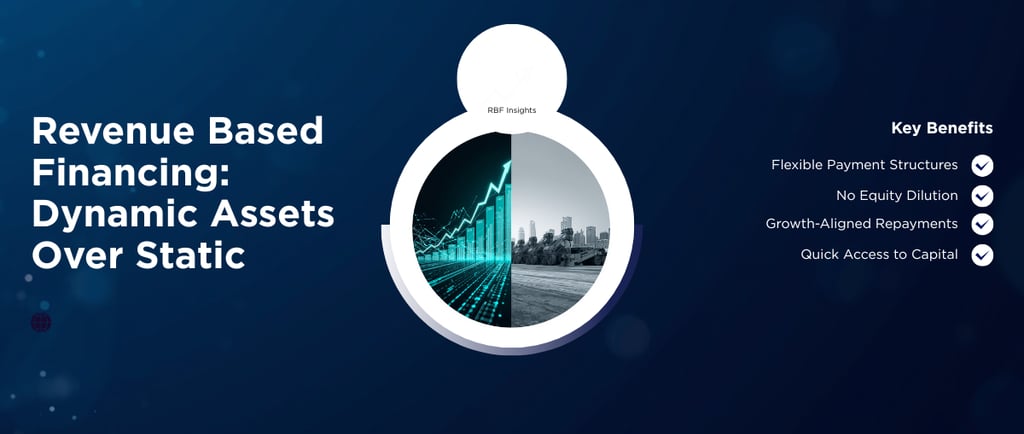
RBF is a funding structure where a business receives capital upfront in exchange for a fixed percentage of future gross revenues. Unlike a traditional loan with a fixed monthly payment, the repayment amount fluctuates in direct proportion to your sales velocity.
The Strategic Nuance:
Ownership vs. Warrants: Ownership typically remains 100% with the founder, though some sophisticated RBF structures may include equity warrants for high-growth firms [2].
Blanket Liens: While RBF does not require a specific asset (like a vehicle) as collateral, it typically involves a blanket lien on all business assets to secure the facility.
Flexible Repayment: Payments scale down during slower months, protecting operational cash flow.
2. Strategic Fit: When Revenue is the Primary Asset
Strategic analysis of the alternative lending market suggests that RBF is particularly effective for companies with high gross margins and repeatable sales patterns. Because the funding is tied to top-line revenue, the "ideal" candidates often fall into these categories:
Professional Services: Agencies, consultants, and healthcare providers.
SaaS & Tech: Firms with recurring subscription-based revenue.
E-commerce: Brands with high inventory turnover and predictable digital sales. [2]
3. Analyzing the "Total Cost of Capital"
A sophisticated evaluation of an RBF offer focuses on the Net Cash Flow available for debt service rather than just gross sales. To avoid "debt traps," a professional structure should generally align with these industry benchmarks:
Investment Multiple: The total payback amount (principal plus cost of capital) typically ranges from 1.1x up to 1.5x of the original principal [3].
Cash Flow Sensitivity: Repayment usually takes 3%–8% of monthly gross sales, but it must be calibrated against your net margins to ensure the facility doesn't impede core obligations like payroll or rent. [3]
4. The 2026 Market Outlook
As of today, Bank Prime Rate remains at 6.75% [4]. While alternative capital carries a higher cost than a traditional bank line, the opportunity cost of waiting months for a bank approval—only to be denied—is often the greater risk. Alternative lending provides the agility required to seize market share in a volatile economy.
Ready to see if your revenue is a potential fit for an RBF? BFP focuses on analyzing complex capital structures so you can make an informed, strategic decision for your business. Click below to take the 2-Minute Capital Assessment. We will analyze your current debt schedule and help you identify the right alternative or private credit partners for your needs.
Email me directly at ygentle@brentfundingpartners.com to schedule a brief consultation.
Bibliography & Sources
[1] Bank Lending Trends: Federal Reserve Board – Senior Loan Officer Opinion Survey (SLOOS), released May 4, 2026. View the Latest SLOOS Report
[2] RBF Strategic Fit & Mechanics: Cerebro Capital – When to Use Revenue-Based Financing for Growing Businesses (Updated April 2026). Read Strategic RBF Analysis
[3] Industry Benchmarks: Beancount.io – Revenue-Based Financing: A Practical Guide for Growing Small Businesses (March 2026). View RBF Benchmarks
[4] Interest Rate Data: Federal Reserve Board – Selected Interest Rates (H.15), May 14, 2026. Verified Bank Prime Rate remains at 6.75%. View Federal Reserve Data
Disclaimer: Brent Funding Partners provides strategic financial information for educational purposes. All business owners are advised to consult with professional tax, legal, or financial advisors regarding your specific business capital structure and financial strategy. The market data, requirements, and rates provided in this newsletter are estimates based on standard Q2 2026 benchmarks for established small and mid-sized enterprises (SMEs).
Contacts
678.692.7994
info@brentfundingpartners.com
BRENT FUNDING PARTNERS
Your partner for alternative funding solutions.